
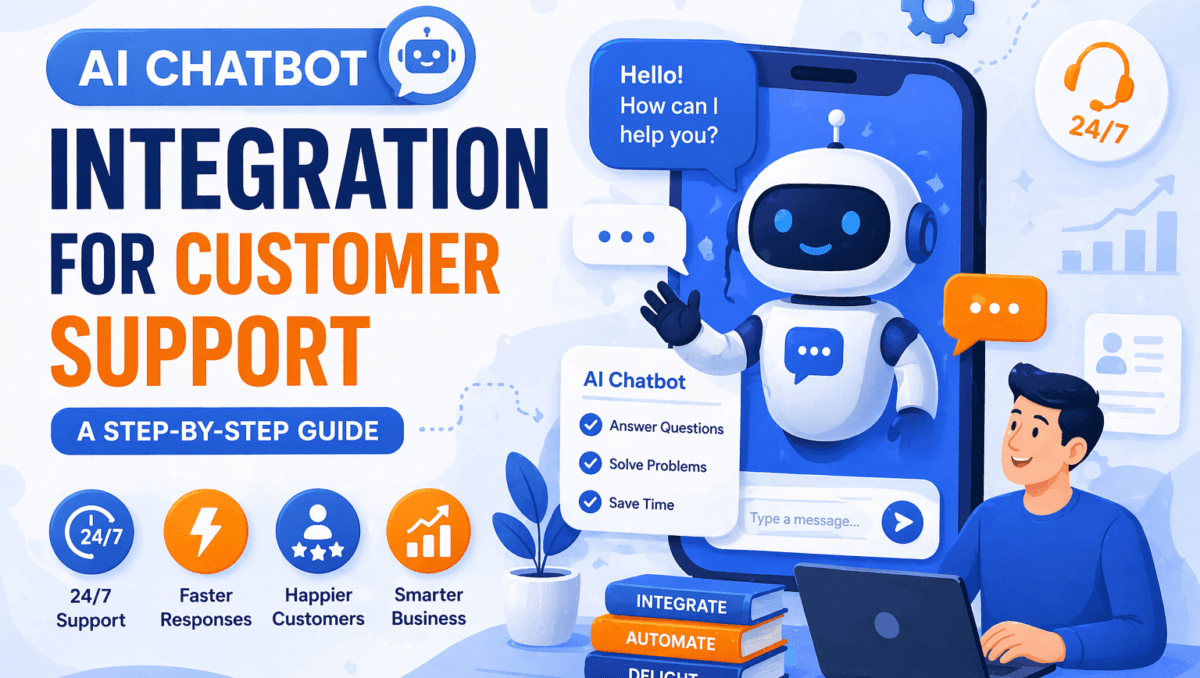
What Are AI Chatbots in Customer Support?
AI chatbots have transformed the way businesses communicate with their customers, turning slow and reactive support systems into fast, intelligent, and always-available solutions. At their core, AI chatbots are software programs powered by machine learning and natural language processing that can understand, interpret, and respond to customer queries in real time. Unlike traditional support systems that rely heavily on human agents, these bots can handle multiple conversations simultaneously without fatigue or delay.
The evolution of AI chatbots has been remarkable. Earlier, businesses used rule-based bots that followed predefined scripts and often failed to understand complex queries. Today, with advanced AI Integration Services, chatbots can learn from past interactions, improve over time, and deliver highly personalized responses. According to recent data, AI chatbots can now resolve 60–80% of customer queries without human intervention , making them an essential tool for modern customer support systems.
Think of AI chatbots as digital support agents that never sleep, never get overwhelmed, and continuously learn. They are not just answering questions anymore—they are guiding customers, solving problems, and even driving sales. This shift is why businesses across industries are rapidly adopting AI chatbot integration as a core part of their customer experience strategy.
Why Businesses Need AI Integration Services
Customer expectations have changed dramatically in recent years. People no longer want to wait hours—or even minutes—for a response. They expect instant answers, personalized support, and seamless experiences across all platforms. This is where AI Integration Services come into play, helping businesses embed intelligent chatbots into their websites, apps, and communication channels.
Statistics clearly show the urgency. Around 62% of customers prefer interacting with a chatbot rather than waiting for a human agent . That’s a huge shift in behavior, and businesses that fail to adapt risk losing customers to competitors who offer faster and more efficient support. AI chatbots reduce response times from hours to just seconds, creating a frictionless experience that keeps customers engaged and satisfied.
From a business perspective, the benefits go beyond customer satisfaction. AI integration significantly reduces operational costs by automating repetitive tasks. Reports indicate that companies can reduce support costs by up to 30% through chatbot automation . Instead of hiring more agents to handle increasing support volumes, businesses can scale efficiently using AI.
In simple terms, AI Integration Services act as the bridge between technology and customer experience. They allow businesses to stay competitive, improve efficiency, and deliver the kind of support modern customers expect.
Key Benefits of AI Chatbot Integration
One of the biggest advantages of AI chatbot integration is its ability to provide 24/7 customer support. Unlike human agents who work in shifts, chatbots are always available, ensuring that customers receive assistance anytime they need it. This is especially valuable for global businesses that serve customers across different time zones.
Another major benefit is speed. AI chatbots respond to queries in 2–5 seconds on average, compared to several minutes or even hours for human responses . This instant response capability not only improves user experience but also increases the chances of converting leads into customers. When users get immediate answers, they are more likely to stay engaged and complete their journey.
Customer satisfaction also sees a significant boost with AI chatbot integration. Well-implemented chatbots can achieve customer satisfaction scores close to human agents, often within just a few points difference . This means businesses can maintain high-quality support while reducing costs and workload.
Additionally, AI chatbots help businesses handle high volumes of queries without compromising quality. They can manage thousands of conversations simultaneously, ensuring that no customer is left waiting. This scalability is one of the key reasons why AI chatbots are becoming a standard feature in customer support systems.
Types of AI Chatbots
Understanding the different types of AI chatbots is crucial before implementing them. Broadly, chatbots can be divided into rule-based and AI-powered bots. Rule-based bots follow predefined scripts and can only respond to specific commands. While they are simple to implement, they lack flexibility and often fail to handle complex queries.
On the other hand, AI-powered chatbots use machine learning and natural language processing to understand context and intent. These bots can learn from interactions, improve over time, and provide more accurate and personalized responses. This makes them far more effective for modern customer support systems.
Another classification is based on communication channels—text and voice chatbots. Text-based chatbots are commonly used on websites and messaging platforms, while voice chatbots are used in call centers and smart devices. Voice AI is gaining popularity, with businesses using it to automate phone support and improve customer experience.
Choosing the right type of chatbot depends on your business needs, budget, and customer preferences. However, most businesses today prefer AI-powered chatbots due to their flexibility, scalability, and ability to deliver superior customer experiences.
Step-by-Step Guide to AI Chatbot Integration
Step 1: Define Business Goals
The first step in chatbot integration is understanding what you want to achieve. Are you looking to reduce support costs, improve response time, or increase sales? Defining clear goals helps you choose the right chatbot solution and measure its success effectively.
Step 2: Choose the Right Platform
Selecting the right platform is crucial for successful implementation. There are various chatbot platforms available, each offering different features and capabilities. Look for a platform that supports AI, integrates easily with your existing systems, and provides customization options.
Step 3: Data Collection and Training
AI chatbots rely on data to function effectively. This includes FAQs, customer queries, product information, and past support interactions. The more data you provide, the better your chatbot will perform. Training the chatbot with accurate and relevant data ensures that it can handle queries effectively.
Step 4: Integration with Existing Systems
Integration is where AI Integration Services play a critical role. Your chatbot should connect seamlessly with CRM systems, databases, and other tools. Studies show that chatbots integrated with backend systems achieve 2–3x higher resolution rates . This ensures that the chatbot can access real-time information and provide accurate responses.
Step 5: Testing and Optimization
Before launching, thoroughly test your chatbot to identify and fix any issues. Monitor its performance, analyze user interactions, and continuously optimize it. AI chatbots improve over time, so regular updates and training are essential for maintaining high performance.
Common Challenges in AI Integration
Despite its benefits, AI chatbot integration comes with challenges. One of the biggest issues is data accuracy. If the chatbot is trained on incomplete or outdated data, it may provide incorrect responses, leading to poor customer experiences.
Another challenge is building customer trust. Some users may prefer human interaction and feel uncomfortable interacting with a chatbot. Transparency and easy escalation to human agents can help address this issue.
There is also the risk of over-automation. While AI can handle many tasks, it is important to maintain a balance between automation and human support. Complex or sensitive queries should always be handled by human agents to ensure the best possible outcome.
Best Practices for Successful Implementation
To get the most out of AI chatbot integration, businesses should focus on a hybrid approach that combines AI and human support. Chatbots should handle routine queries, while human agents handle complex issues. This ensures efficiency without compromising quality.
Continuous improvement is another key factor. Regularly updating your chatbot with new data and insights helps it stay relevant and effective. Monitoring performance metrics such as response time, resolution rate, and customer satisfaction can provide valuable insights for optimization.
Personalization is also crucial. Modern customers expect tailored experiences, and AI chatbots can deliver this by analyzing user behavior and preferences. This not only improves customer satisfaction but also increases engagement and conversions.
Future Trends in AI Customer Support
The future of AI customer support is focused on personalization and automation. AI chatbots are becoming more intelligent, capable of understanding emotions, and providing context-aware responses. This will lead to more natural and human-like interactions.
Another trend is the integration of AI across multiple channels, creating a seamless omnichannel experience. Customers will be able to switch between chat, email, and voice without losing context, making support more efficient and convenient.
As technology continues to evolve, AI chatbots will become an integral part of customer support strategies, helping businesses deliver faster, smarter, and more personalized experiences.
Conclusion
AI chatbot integration is no longer a luxury—it’s a necessity for businesses that want to stay competitive in today’s fast-paced digital world. With the help of AI Integration Services, companies can automate support, reduce costs, and deliver exceptional customer experiences. The key to success lies in choosing the right tools, training them effectively, and continuously optimizing their performance.
FAQs
1. How much does AI chatbot integration cost?
Costs vary depending on the platform and complexity, but businesses often see significant ROI due to reduced support costs.
2. Can AI chatbots replace human agents?
No, they are designed to assist rather than replace humans, handling routine tasks while agents focus on complex issues.
3. How long does it take to implement a chatbot?
Modern tools allow deployment in as little as 1–7 days , depending on complexity.
4. Are AI chatbots suitable for small businesses? Yes, AI chatbots are scalable and affordable, making them ideal for businesses of all sizes.